


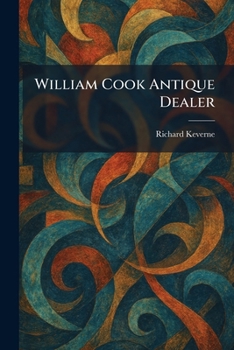
William Cook Antique Dealer

Select Format
Select Condition 
Book Overview
"William Cook Antique Dealer" is a compelling classic of Golden Age detective fiction, blending suspense and international intrigue in a narrative that traverses the English countryside and the shores of Europe. The story centers on a young man who, while traveling in France, encounters a mysterious figure and becomes drawn into a complex web involving an enigmatic antique dealer based in a quiet Suffolk village. As the protagonist peels back the layers of William Cook's business, he uncovers a sophisticated smuggling ring that challenges his wits and puts his life at risk.
Written by Richard Keverne, a notable voice in early 20th-century British mystery, this work is celebrated for its atmospheric tension and well-constructed plot. Eschewing the traditional drawing-room murder for a more dynamic thriller approach, the novel captures the spirit of adventure and the moral ambiguities of the interwar period. "William Cook Antique Dealer" remains a significant example of the "crook story" genre, offering readers a sophisticated mix of amateur sleuthing and high-stakes criminal enterprise. Its focus on character-driven suspense and authentic period detail makes it an essential read for enthusiasts of vintage crime and detective literature.
This work has been selected by scholars as being culturally important, and is part of the knowledge base of civilization as we know it. This work was reproduced from the original artifact, and remains as true to the original work as possible. Therefore, you may see the original copyright references, library stamps (as most of these works have been housed in our most important libraries around the world), and other notations in the work.
This work is in the public domain in the United States of America, and possibly other nations. Within the United States, you may freely copy and distribute this work, as no entity (individual or corporate) has a copyright on the body of the work.
As a reproduction of a historical artifact, this work may contain missing or blurred pages, poor pictures, errant marks, etc. Scholars believe, and we concur, that this work is important enough to be preserved, reproduced, and made generally available to the public. We appreciate your support of the preservation process, and thank you for being an important part of keeping this knowledge alive and relevant.
Customer Reviews
ThriftBooks ® and the ThriftBooks ® logo are registered trademarks of Thrift Books Global, LLC
