


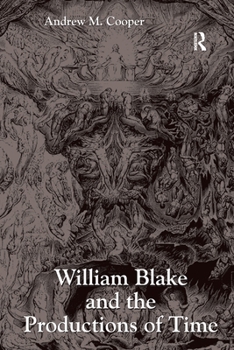
William Blake and the Productions of Time
No Customer Reviews

Select Format
Select Condition 
Book Overview
Challenging the idea that a writer's work reflects his experiences in time and place, Cooper locates the action of William Blake's major illuminated books in the ahistorical present, an impersonal spirit realm beyond the three-dimensional self. Historicist attempts to place Blake's vision in perspective, Cooper argues, involve a self-contradictory
Format:Paperback
Language:English
ISBN:1032921137
ISBN13:9781032921136
Release Date:October 2024
Publisher:Routledge
Length:362 Pages
Weight:1.12 lbs.
Dimensions:0.8" x 6.1" x 9.2"
Customer Reviews
0 rating
Copyright © 2026 Thriftbooks.com
Terms of Use | Privacy Policy | Do Not Sell/Share My Personal Information | Cookie Notice | Cookie Preferences | Accessibility Statement
ThriftBooks ® and the ThriftBooks ® logo are registered trademarks of Thrift Books Global, LLC
ThriftBooks ® and the ThriftBooks ® logo are registered trademarks of Thrift Books Global, LLC
