


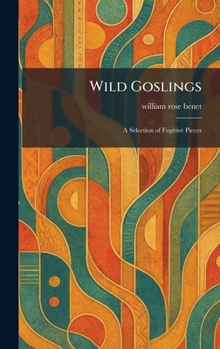
Wild Goslings: A Selection of Fugitive Pieces

"Wild Goslings: A Selection of Fugitive Pieces" is a spirited collection of essays, sketches, and literary observations by the celebrated American author William Rose Ben t. Compiled during the height of the 1920s literary scene, these "fugitive pieces" showcase Ben t's sharp wit, imaginative range, and keen eye for the eccentricities of modern life. The collection spans a diverse array of subjects, from whimsical reflections on everyday occurrences to insightful commentary on the literary landscape of his era.
Ben t, widely known for his lyrical prowess and significant editorial influence, brings a poetic sensibility to these prose works, blending lighthearted humor with thoughtful introspection. Readers will find a treasure trove of short, engaging pieces that capture the intellectual energy and cultural shifts of early 20th-century America. Whether exploring the nuances of creative expression or the absurdities of social conventions, Ben t's writing remains vibrant and accessible. "Wild Goslings: A Selection of Fugitive Pieces" serves as an essential companion for those interested in the broader body of work produced by one of the period's most significant literary figures, standing as a testament to the enduring charm of the American essay and the versatile talent of its creator.
This work has been selected by scholars as being culturally important, and is part of the knowledge base of civilization as we know it. This work was reproduced from the original artifact, and remains as true to the original work as possible. Therefore, you may see the original copyright references, library stamps (as most of these works have been housed in our most important libraries around the world), and other notations in the work.
This work is in the public domain in the United States of America, and possibly other nations. Within the United States, you may freely copy and distribute this work, as no entity (individual or corporate) has a copyright on the body of the work.
As a reproduction of a historical artifact, this work may contain missing or blurred pages, poor pictures, errant marks, etc. Scholars believe, and we concur, that this work is important enough to be preserved, reproduced, and made generally available to the public. We appreciate your support of the preservation process, and thank you for being an important part of keeping this knowledge alive and relevant.
Customer Reviews
ThriftBooks ® and the ThriftBooks ® logo are registered trademarks of Thrift Books Global, LLC
