


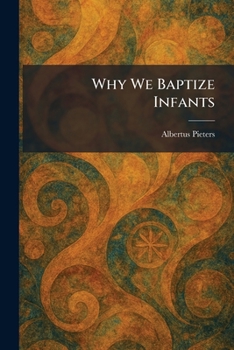
Why We Baptize Infants

"Why We Baptize Infants" is a rigorous and thoughtful examination of one of the most foundational practices in the Christian tradition. Written by Albertus Pieters, this work provides a systematic defense of infant baptism, grounding its arguments in biblical exegesis and historical theology. The book is designed to assist both clergy and laypeople in understanding the scriptural and covenantal foundations that support the baptism of children within the church community.
Pieters explores the continuity between the Old and New Testaments, focusing on the concept of the covenant and the role of the family in the life of faith. He addresses common objections to paedobaptism and offers a compelling narrative of how this sacrament serves as a sign and seal of God's promises. Through careful analysis, the author demonstrates how the practice aligns with the broader teachings of the Reformed tradition, emphasizing the priority of divine grace over human response.
This classic theological treatise remains a vital resource for those seeking to deepen their understanding of sacramental theology and the historical development of Christian rites. "Why We Baptize Infants" offers a clear perspective on the spiritual significance of welcoming the youngest members of the faith into the visible body of Christ through covenant theology and biblical precedent.
This work has been selected by scholars as being culturally important, and is part of the knowledge base of civilization as we know it. This work was reproduced from the original artifact, and remains as true to the original work as possible. Therefore, you may see the original copyright references, library stamps (as most of these works have been housed in our most important libraries around the world), and other notations in the work.
This work is in the public domain in the United States of America, and possibly other nations. Within the United States, you may freely copy and distribute this work, as no entity (individual or corporate) has a copyright on the body of the work.
As a reproduction of a historical artifact, this work may contain missing or blurred pages, poor pictures, errant marks, etc. Scholars believe, and we concur, that this work is important enough to be preserved, reproduced, and made generally available to the public. We appreciate your support of the preservation process, and thank you for being an important part of keeping this knowledge alive and relevant.
Customer Reviews
ThriftBooks ® and the ThriftBooks ® logo are registered trademarks of Thrift Books Global, LLC
