


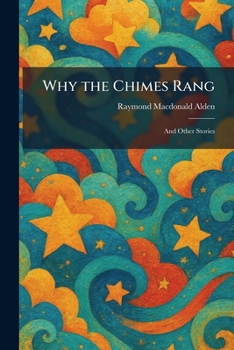
Why the Chimes Rang: And Other Stories

Select Format
Select Condition 
Book Overview
"Why the Chimes Rang, and Other Stories" is a timeless collection of moral allegories and enchanting tales designed to inspire the imagination and touch the heart. Written with a gentle clarity, these stories explore deep ethical themes through the lens of folklore and wonder, making them accessible to readers of all ages.
The title story, "Why the Chimes Rang," remains one of the most beloved Christmas tales in the English language. It tells the moving account of a young boy whose simple, selfless act of kindness resonates more powerfully than the grandest offerings of the wealthy and powerful. Beyond this famous centerpiece, the collection includes a variety of other narratives that delve into the nature of true service, the beauty of sacrifice, and the importance of integrity. Each story functions as a modern parable, blending the tradition of the fairy tale with profound spiritual insights.
Alden's work is characterized by its lyrical prose and its ability to convey complex virtues-such as humility, charity, and perseverance-without being overly didactic. This collection stands as a significant contribution to early 20th-century children's literature, offering stories that continue to provide comfort and moral guidance during the holiday season and beyond.
This work has been selected by scholars as being culturally important, and is part of the knowledge base of civilization as we know it. This work was reproduced from the original artifact, and remains as true to the original work as possible. Therefore, you may see the original copyright references, library stamps (as most of these works have been housed in our most important libraries around the world), and other notations in the work.
This work is in the public domain in the United States of America, and possibly other nations. Within the United States, you may freely copy and distribute this work, as no entity (individual or corporate) has a copyright on the body of the work.
As a reproduction of a historical artifact, this work may contain missing or blurred pages, poor pictures, errant marks, etc. Scholars believe, and we concur, that this work is important enough to be preserved, reproduced, and made generally available to the public. We appreciate your support of the preservation process, and thank you for being an important part of keeping this knowledge alive and relevant.
Customer Reviews
ThriftBooks ® and the ThriftBooks ® logo are registered trademarks of Thrift Books Global, LLC
