


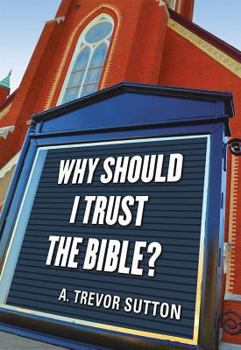
Why Should I Trust the Bible?

Select Format
Select Condition 
Book Overview
Real questions. Honest history. A clear case for why the Bible can be trusted.
In a culture that prizes "my truth" over truth itself, it's natural to wonder whether the Bible is simply another ancient book--changed over time, filled with contradictions, or disconnected from modern life.
Drawing on history, archaeology, manuscript evidence, and the life of Jesus Christ, pastor and author A. Trevor Sutton tackles the questions skeptics and believers alike continue to ask. With a conversational style and pastoral approach, he explores what the evidence actually says about the Bible's reliability, accuracy, and enduring relevance.
Inside, you will discover:
Why thousands of biblical manuscripts strengthen rather than weaken confidence in Scripture How the Dead Sea Scrolls, archaeology, and other historical evidence support the Bible's credibility What to make of apparent contradictions in the Gospels A practical framework for understanding difficult topics such as slavery, gender, and race How the historical reality of Jesus' death and resurrection provides the strongest foundation for trusting the BibleEach chapter addresses a common challenge to biblical trustworthiness--from myths and manuscript variations to questions about the canon, translation, and relevance today. Brief comparison sections examine how historians evaluate other well-known texts, helping readers understand why the Bible stands up to scrutiny.
Whether you're wrestling with doubts, exploring Christianity, leading a Bible study, or helping a skeptical friend, Why Should I Trust the Bible? offers a thoughtful, accessible guide to the evidence behind Scripture--and the Christ who stands at its center.
Customer Reviews
ThriftBooks ® and the ThriftBooks ® logo are registered trademarks of Thrift Books Global, LLC
