


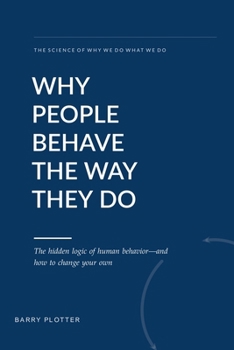
Why People Behave the Way They Do: The Hidden Logic of Human Behavior and How to Change Your Own

Why do you keep doing things you genuinely want to stop doing?
Why does knowing what is good for you so often fail to make you do it? Why can a small change in your surroundings make you behave like a completely different person? And why do habits sometimes seem to operate before you have even made a decision?
We tend to explain behavior with words like lazy, disciplined, weak, motivated, or self-sabotaging. But these labels describe the person without explaining the behavior.
There is a better question: what was true about the situation when it happened?
Why People Behave the Way They Do explores the hidden machinery behind everyday human behavior, drawing on psychology, neuroscience, behavioral science, and research on habits, motivation, personality, and decision-making.
Inside, you will discover:
Why behavior is often a response to conditions rather than a simple reflection of character
How the brain uses predictions to automate familiar behavior
Why habits can continue even after you stop wanting their rewards
Why knowing better does not necessarily lead to doing better
How sleep, hunger, stress, and other bodily states influence your decisions
How temperament and early experiences shape the patterns you develop
Why motivation is less reliable than most self-improvement advice suggests
Why trying harder is often less effective than redesigning your environment
What to do when you lapse without turning one mistake into a complete failure
How understanding your own behavior can help you understand other people more generously
This is not a book about becoming a perfectly disciplined person.
It is about learning to see behavior differently.
When you stop asking "What's wrong with me?" and start asking "What conditions produced this?", a problem that once looked like a character flaw can become something you can actually work with.
The goal is not to give you another collection of motivational slogans. It is to give you a more useful model of why people do what they do-and where you can put the lever when you want to change.
Related Subjects
PsychologyCustomer Reviews
ThriftBooks ® and the ThriftBooks ® logo are registered trademarks of Thrift Books Global, LLC
