


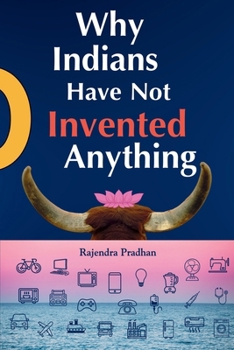
Why Indians Have Not Invented Anything?

No steam engine. No telephone. No airplane. Why?
The world has asked this question about India for two centuries - in lecture halls, in history books, and in the quiet, uncomfortable thoughts of Indians themselves. Why did a civilization that produced extraordinary mathematics, philosophy, medicine, and art produce almost none of the machines that built the modern world?
Rajendra Pradhan sat with this question for more than a decade. He asked it in living rooms, chai shops, offices, and temples across India. Some said we were lazy. Some blamed colonization, caste, the system. Some said, with pride, we already invented everything. None of the answers satisfied him - because every answer assumed the same thing: that not inventing was a failure.
This book begins with a different assumption. What if it was a choice?
Drawing on the Vedas, the Gita, Ayurveda, and the living practices of ordinary Indian households - the grandmother's kitchen, the white cloth, the fasting calendar, the stories every child knows - Why Indians Have Not Invented Anything makes a startling case: India identified desire itself as the root disease of human suffering, and built an entire civilization around treating it. While the world invented outward, India invented inward - and encoded its discoveries where no library could burn them.
In the age of artificial intelligence, as machines learn to do everything humans invented machines to do, one question remains that no algorithm can answer: what is a human being for?
India answered it five thousand years ago. This book is the remembering.
Customer Reviews
ThriftBooks ® and the ThriftBooks ® logo are registered trademarks of Thrift Books Global, LLC
