


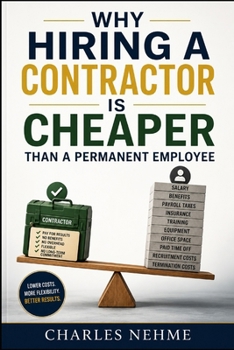
Why Hiring a Contractor Is Cheaper Than a Permanent Employee

The modern business world is changing faster than ever before. Companies are under constant pressure to reduce operational costs, improve efficiency, remain competitive, and adapt quickly to economic uncertainty. One of the most significant transformations taking place across industries is the shift from traditional permanent employment models toward flexible contractor-based workforces.
For decades, businesses viewed permanent employment as the foundation of stability and growth. However, rising labor costs, increased global competition, technological disruption, remote work capabilities, and project-driven economies have reshaped how organizations operate. Today, many companies are discovering that hiring contractors, consultants, freelancers, and specialized professionals can provide substantial financial and operational advantages over maintaining large permanent teams.
This book explores one of the most important questions facing modern organizations:
Why can hiring a contractor often be cheaper and more efficient than hiring a permanent employee?
The answer goes far beyond salary comparisons. Permanent employees bring numerous hidden costs, including benefits, insurance, taxes, office space, training, administration, legal liabilities, and long-term obligations. Contractors, on the other hand, often provide targeted expertise, flexibility, and project-focused productivity without many of the financial burdens associated with full-time employment.
This book is not intended to suggest that permanent employees are unnecessary. In many situations, full-time staff are essential for organizational continuity, leadership, culture, and long-term strategic growth. Instead, this book aims to help business owners, executives, engineers, managers, entrepreneurs, and professionals better understand the financial realities, strategic considerations, and operational benefits associated with contractor-based hiring models.
Throughout these chapters, readers will discover:
The hidden costs of permanent employmentFinancial advantages of contractor hiringWorkforce flexibility strategiesLegal and compliance considerationsIndustry-specific contractor applicationsProductivity and efficiency comparisonsHybrid workforce models for modern businessesFuture workforce trends shaping global industriesThe rise of remote work, digital collaboration, and global talent access has made contractor hiring easier and more effective than ever before. Businesses are no longer limited by geography when searching for expertise. Companies can now hire highly specialized professionals for specific projects without carrying long-term payroll burdens.
As industries continue evolving, organizations that understand how to strategically balance permanent staff and contractors will likely gain significant competitive advantages in cost management, innovation, and operational agility.
This book is designed to provide practical insight into this evolving workforce reality and help decision-makers make informed staffing choices in an increasingly dynamic business environment.
Customer Reviews
ThriftBooks ® and the ThriftBooks ® logo are registered trademarks of Thrift Books Global, LLC
