


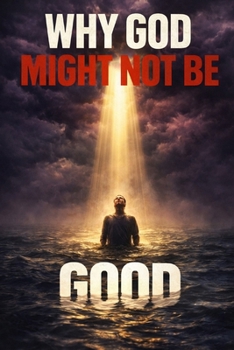
Why God Might Not Be Good

God is often described as all-powerful, all-knowing... and perfectly good.
But what if that assumption deserves to be questioned?
Throughout history, people have tried to reconcile suffering, injustice, and chaos with the idea of a benevolent God. Yet the world often tells a more complicated story - one that doesn't always align with the belief in a purely good and protective force.
Why God Might Not Be Good explores this uncomfortable tension. It examines the gap between religious teachings and human experience, asking whether the traditional image of God reflects reality - or human expectation.
Through philosophical reflection and psychological insight, this book challenges readers to reconsider what "good" means when applied to something infinite, and whether morality, as humans understand it, can truly be projected onto the idea of God.
Because the hardest questions are not about belief.
They are about what belief implies.
If you've ever struggled to reconcile faith with reality, or wondered why the concept of a good God can feel difficult to defend, this book offers a bold and thought-provoking perspective.
Customer Reviews
ThriftBooks ® and the ThriftBooks ® logo are registered trademarks of Thrift Books Global, LLC
