


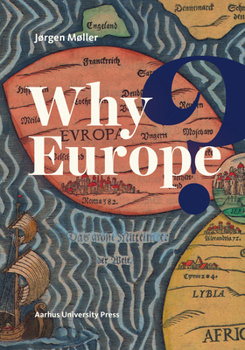
Why Europe?
No Customer Reviews

Why Europe? What made Western and Central Europe, long an economic and political backwater compared with the other great agrarian civilisations of Eurasia, the cradle of modernity? This short book argues that the crucial juncture occurred in backward medieval Europe when a reform movement within the Catholic Church challenged lay rulers' hold over the appointment of bishops. This eleventh-century rupture sundered religious and lay power, and meant that European emperors, kings, and princes henceforth had to tread a fine line: caught between the opposition they encountered from strong social groups such as townsmen, nobles, and Catholic clergy and from other European rulers. What Karl Marx dismissively referred to as the "medieval rubbish" nurtured the seeds of modern Europe - the modern state, the modern market economy, and modern democracy - by creating power pluralism between and within political units.
Format:Paperback
Language:English
ISBN:8775970015
ISBN13:9788775970018
Release Date:June 2026
Publisher:Aarhus University Press
Length:96 Pages
Weight:0.34 lbs.
Dimensions:0.3" x 5.5" x 7.9"
Customer Reviews
0 rating
Copyright © 2026 Thriftbooks.com
Terms of Use | Privacy Policy | Do Not Sell/Share My Personal Information | Cookie Notice | Cookie Preferences | Accessibility Statement
ThriftBooks ® and the ThriftBooks ® logo are registered trademarks of Thrift Books Global, LLC
ThriftBooks ® and the ThriftBooks ® logo are registered trademarks of Thrift Books Global, LLC
