


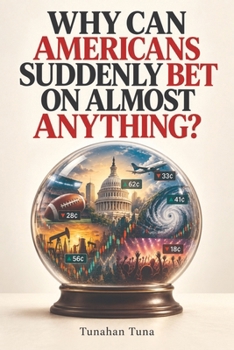
WHY CAN AMERICANS SUDDENLY BET ON ALMOST ANYTHING?

Why does it suddenly seem possible to bet on almost anything?
An election. A football game. Tomorrow's temperature. An interest-rate decision. A celebrity appearance. More and more uncertain events can now be turned into contracts, given prices, traded on a phone, and settled when the future finally arrives.
Why Can Americans Suddenly Bet on Almost Anything? explores how prediction markets moved from a specialized forecasting mechanism into mainstream American life-and why the change happened so quickly. The story runs through the legalization and normalization of sports betting, the rise of app-based investing and speculative trading, the shrinking distance between curiosity and financial risk, and the powerful appeal of believing that your knowledge might be worth money.
Along the way, the book asks what these markets actually are. Are they gambling, financial trading, forecasting tools-or some combination of all three? Can market prices really reveal useful information about the future? What happens when insiders know more than everyone else, when traders can influence the event they are betting on, or when war, death, politics, and private lives become things that can carry a price? Drawing on economics, psychology, law, financial markets, sports betting, and the rapid growth of platforms such as Kalshi and Polymarket, the book explains a larger cultural shift: the future itself is becoming something people can trade. What changed was not the human desire to predict what happens next. What changed was how easy it became to put a price on being right.Customer Reviews
ThriftBooks ® and the ThriftBooks ® logo are registered trademarks of Thrift Books Global, LLC
