


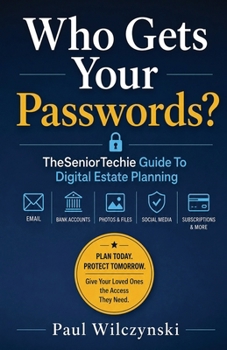
Who Gets Your Passwords?: TheSeniorTechie Guide to Digital Estate Planning

When you die or become incapacitated, your family won't be locked out of your stuff in some dramatic movie way. They'll be locked out in the most ordinary way possible: they won't know your passwords, won't be able to unlock your phone, and won't know which of your three banks holds the most money.
This happens constantly. Wills cover the house and the car. Almost nobody's will covers the seventeen accounts you log into every week.
Who Gets Your Passwords? is a plain-language guide to digital estate planning for two readers: people who want their digital life accessible to the people they love, and adult children trying to help an aging parent get organized before crisis hits.
This is not about technology for its own sake. It's about what happens to your email, photos, social media, online banking, and the dozens of accounts you've accumulated over twenty years when you're no longer managing them. Some can be planned simply. Some are more complicated than they should be. This book tells you which is which, without legal jargon and without pretending one app solves everything.
You'll learn what actually happens to your accounts when you die or become incapacitated, how to build a digital account inventory without a spreadsheet degree, how to manage passwords so the right person can get in when you can't, how to protect your photos from disappearing, what social media platforms actually do when someone dies, how to keep financial accounts accessible without giving away more access than you intend, how to talk to your family about all this, and how to put it into one simple package they can find when they need it most.
Each chapter includes real situations from real families and ends with specific things you can do that week. Not someday. That week.
You don't need to be tech-savvy. You need to be willing to spend a few afternoons getting your digital house in order, the same way you might already have a will or emergency contacts. This book treats your digital life with that same seriousness, because for most families today, it deserves it.
Written by Paul Wilczynski, creator of TheSeniorTechie newsletter.
Customer Reviews
ThriftBooks ® and the ThriftBooks ® logo are registered trademarks of Thrift Books Global, LLC
