


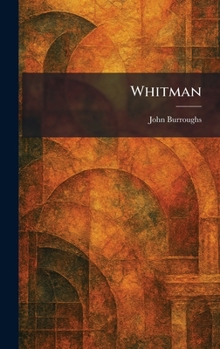
Whitman

"Whitman" by John Burroughs is an intimate and profound study of one of America's most influential poets, Walt Whitman. Written by a close friend and renowned naturalist, this work offers a unique perspective that combines personal biography with insightful literary analysis. Burroughs delves into the life, character, and revolutionary spirit of the man who authored "Leaves of Grass," exploring how Whitman's verse reshaped the landscape of American poetry and democratic ideals.
The text focuses on the central themes of Whitman's work, including his deep connection to the natural world, his celebration of the individual, and his visionary outlook on the American experience. Burroughs examines the poet's role as a pioneer of free verse and a voice for the common people, providing a defense of his then-controversial style. Through a blend of critical observation and personal anecdote, the book illustrates the spiritual and physical vitality that defined Whitman's existence. "Whitman" remains a vital resource for understanding the literary and philosophical foundations of 19th-century America, offering a timeless tribute to the "Good Gray Poet" and his enduring legacy as a champion of the human spirit.
This work has been selected by scholars as being culturally important, and is part of the knowledge base of civilization as we know it. This work was reproduced from the original artifact, and remains as true to the original work as possible. Therefore, you may see the original copyright references, library stamps (as most of these works have been housed in our most important libraries around the world), and other notations in the work.
This work is in the public domain in the United States of America, and possibly other nations. Within the United States, you may freely copy and distribute this work, as no entity (individual or corporate) has a copyright on the body of the work.
As a reproduction of a historical artifact, this work may contain missing or blurred pages, poor pictures, errant marks, etc. Scholars believe, and we concur, that this work is important enough to be preserved, reproduced, and made generally available to the public. We appreciate your support of the preservation process, and thank you for being an important part of keeping this knowledge alive and relevant.
Customer Reviews
ThriftBooks ® and the ThriftBooks ® logo are registered trademarks of Thrift Books Global, LLC
