


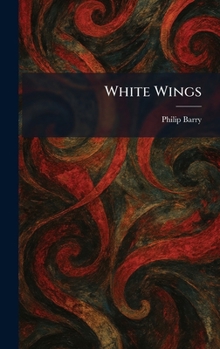
White Wings

"White Wings" is a whimsical and satirical play by the celebrated American dramatist Philip Barry. Set during the transitional period when horse-drawn carriages were being replaced by the automobile, the story centers on the Inch family, who have proudly served as "White Wings"-street cleaners-for generations. The protagonist, Archie Inch, finds himself caught in a poignant struggle between his deep-seated loyalty to his family's traditional profession and his romantic interest in Mary Todd, whose father is the inventor of the very vehicle threatening to make Archie's way of life obsolete.
Through sharp dialogue and imaginative symbolism, Barry explores the clash between the romanticism of the past and the inevitable march of modern industrialization. Characterized by the sophisticated wit and thematic nuance that defined Barry's career, the work serves as a clever commentary on societal change, identity, and the bittersweet nature of progress. "White Wings" remains a unique and charming entry in early twentieth-century American theater, offering a thoughtful reflection on how individuals and families navigate a world on the brink of total transformation.
This work has been selected by scholars as being culturally important, and is part of the knowledge base of civilization as we know it. This work was reproduced from the original artifact, and remains as true to the original work as possible. Therefore, you may see the original copyright references, library stamps (as most of these works have been housed in our most important libraries around the world), and other notations in the work.
This work is in the public domain in the United States of America, and possibly other nations. Within the United States, you may freely copy and distribute this work, as no entity (individual or corporate) has a copyright on the body of the work.
As a reproduction of a historical artifact, this work may contain missing or blurred pages, poor pictures, errant marks, etc. Scholars believe, and we concur, that this work is important enough to be preserved, reproduced, and made generally available to the public. We appreciate your support of the preservation process, and thank you for being an important part of keeping this knowledge alive and relevant.
Related Subjects
DramaCustomer Reviews
ThriftBooks ® and the ThriftBooks ® logo are registered trademarks of Thrift Books Global, LLC
