


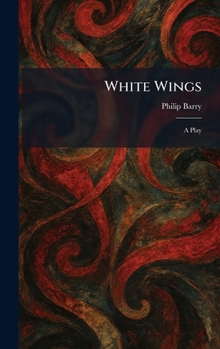
White Wings: A Play

"White Wings" is a whimsical and satirical play by the celebrated American dramatist Philip Barry. Set during the transitional period from horse-drawn transportation to the rise of the automobile, the work centers on the Inch family, a proud lineage of "White Wings"-the uniformed street cleaners responsible for maintaining the city's thoroughfares. The play explores the clash between tradition and modernity through a poignant romantic lens, as Archie Inch struggles to uphold his family's multi-generational legacy while the world around him shifts toward a mechanical future.
Known for his sophisticated wit and keen social observation, Barry infuses this drama with a unique blend of fantasy and realism. The narrative serves as a charming yet biting commentary on the human resistance to change and the inevitable obsolescence of long-held customs. "White Wings" stands as a significant entry in early 20th-century American theater, showcasing Barry's ability to weave profound themes of progress and identity into an engaging theatrical experience. This work remains a fascinating study of societal evolution and the personal costs of progress.
This work has been selected by scholars as being culturally important, and is part of the knowledge base of civilization as we know it. This work was reproduced from the original artifact, and remains as true to the original work as possible. Therefore, you may see the original copyright references, library stamps (as most of these works have been housed in our most important libraries around the world), and other notations in the work.
This work is in the public domain in the United States of America, and possibly other nations. Within the United States, you may freely copy and distribute this work, as no entity (individual or corporate) has a copyright on the body of the work.
As a reproduction of a historical artifact, this work may contain missing or blurred pages, poor pictures, errant marks, etc. Scholars believe, and we concur, that this work is important enough to be preserved, reproduced, and made generally available to the public. We appreciate your support of the preservation process, and thank you for being an important part of keeping this knowledge alive and relevant.
Related Subjects
DramaCustomer Reviews
ThriftBooks ® and the ThriftBooks ® logo are registered trademarks of Thrift Books Global, LLC
