


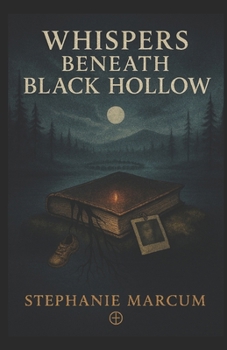
Whispers Beneath Black Hollow

Black Hollow sits in the middle of a map made by other people: a knot of pines, a river that keeps its own ledger, a single road that forgets the faces it carries. To outsiders it is small and stubborn and unremarkable. To the people who live there it is an accumulation of habits - the way a church bell lands, the old bridge's complaint when winter starts, the names sewn into quilts where women keep their promises and their grudges. This story begins where habit twists into appetite.
You will meet Evie Carr in the stretch of the season when Black Hollow still thinks it can account for everything: who owed what, who had taken what, who was blessed by the town and who was counted as a cost. Evie is not a hero in the bright, cinematic sense. She is a neighbor, a person who makes lists and holds grudges, who knows when a ledger is a way of remembering and when it becomes a way of erasing. The ledger at the river's lip is older than any one of them; it knows names and it knows how to trade. When it starts to write, people begin to disappear into columns.
This novel is about transactions of a peculiar kind: how a small town bargains with secrecy, how grief becomes currency, and how a community learns - sometimes too late - that the quietest bargains demand the fiercest currency. It is about what we will give to keep those we love from vanishing, and about the strange arithmetic of memory: how a town can be stitched together and how the seams sometimes show red.
I do not promise tidy endings. What I offer instead are questions sharpened into moments: what does it mean to be named? How much of a self is held inside private memory, and what happens when that interior life is offered to a book that learns the language of hunger? The ledger will ask for payment; Black Hollow will answer in ways that are small and terrible and human.
A note on reading: this book was written for the slow burn - read it with the lights low and the windows closed if you like, but keep your wits about you. There are scenes meant to unsettle and to linger. If you need a pause, step outside and count the pines. Come back when you are ready.
Thank you for opening this book. If the pages begin to whisper, do as the town does: listen carefully, name what you must, and remember that sometimes the bravest act is the most public one - to say another person's name aloud so the ledger cannot translate it into absence.
Customer Reviews
ThriftBooks® and the ThriftBooks® logo are registered trademarks of Thrift Books Global, LLC
