


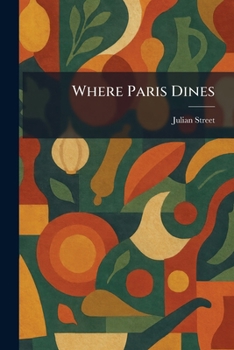
Where Paris Dines

"Where Paris Dines" is an evocative and comprehensive guide to the culinary landscape of Paris during the vibrant interwar era. Written by renowned gastronome Julian Street, this work serves as both a practical manual for the traveler and a sophisticated exploration of French dining culture. It captures a pivotal moment in history when the "City of Light" was the global epicenter of art, literature, and fine cuisine.
Street provides detailed observations on a wide array of establishments, from legendary haute cuisine institutions to charming neighborhood bistros and bohemian cafes. Beyond simple listings, the book offers insights into the etiquette, traditions, and essential dishes that defined the Parisian table. Readers are introduced to the nuances of wine selection, the art of the multi-course meal, and the personalities that shaped the city's gastronomic reputation.
As a historical document, "Where Paris Dines" offers a fascinating glimpse into the world of the Lost Generation, reflecting the tastes and social customs of a bygone era. It remains an essential read for food historians, travelers, and anyone interested in the enduring legacy of French gastronomy. This guide stands as a testament to the timeless allure of Parisian dining and the meticulous craftsmanship of one of the twentieth century's most respected food writers.
This work has been selected by scholars as being culturally important, and is part of the knowledge base of civilization as we know it. This work was reproduced from the original artifact, and remains as true to the original work as possible. Therefore, you may see the original copyright references, library stamps (as most of these works have been housed in our most important libraries around the world), and other notations in the work.
This work is in the public domain in the United States of America, and possibly other nations. Within the United States, you may freely copy and distribute this work, as no entity (individual or corporate) has a copyright on the body of the work.
As a reproduction of a historical artifact, this work may contain missing or blurred pages, poor pictures, errant marks, etc. Scholars believe, and we concur, that this work is important enough to be preserved, reproduced, and made generally available to the public. We appreciate your support of the preservation process, and thank you for being an important part of keeping this knowledge alive and relevant.
Customer Reviews
ThriftBooks ® and the ThriftBooks ® logo are registered trademarks of Thrift Books Global, LLC
