


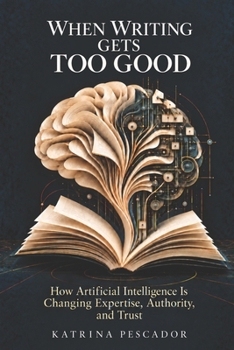
When Writing Gets Too Good: How Artificial Intelligence Is Changing Expertise, Authority, and Trust

A report can sound authoritative before anyone has checked whether it is right.
Artificial intelligence can turn a few instructions into a polished proposal, a persuasive explanation, or a confident analysis. That ability is useful. It also complicates a familiar judgment: whether the person presenting the work understands enough to stand behind it.
In When Writing Gets Too Good: How Artificial Intelligence Is Changing Expertise, Authority, and Trust, Katrina Pescador examines what happens when the appearance of expertise becomes easier to produce than expertise itself.
Writing has never guaranteed sound reasoning. Yet its structure, precision, and voice have long helped us judge credibility. AI makes those signals easier to reproduce, leaving readers to distinguish between an explanation grounded in knowledge and one that merely sounds convincing.
Drawing on her experience as a writer and museum professional, alongside her own use of AI, Pescador explores how this change affects everyday work. A polished document can help someone communicate knowledge they struggle to express. It can also conceal gaps in understanding, carry unsupported claims into decisions, or acquire authority simply because it looks finished.
The consequences reach beyond individual writing. Leaders must decide what to approve. Educators must assess what students understand. Professionals must determine which sources deserve trust-and remain accountable for the work they put their names to.
For readers navigating these questions, this book offers a thoughtful examination of AI's benefits, its limits, and the judgment required to use it well. It asks how we can preserve the connection between what we communicate, what we know, and what we are prepared to defend.
When writing becomes effortless, knowing what deserves confidence takes more work.
Customer Reviews
ThriftBooks ® and the ThriftBooks ® logo are registered trademarks of Thrift Books Global, LLC
