


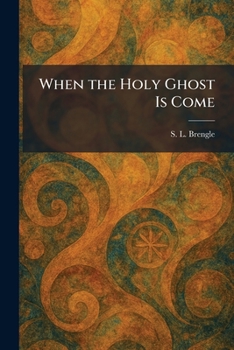
When the Holy Ghost Is Come

Select Format
Select Condition 
Book Overview
"When the Holy Ghost Is Come" is a profound exploration of the person, presence, and power of the Holy Spirit in the life of the believer. Written by Colonel Samuel Logan Brengle, one of the most influential voices in the holiness movement, this work serves as both a theological treatise and a practical manual for spiritual transformation. Brengle examines the biblical promises regarding the Comforter and details how the indwelling of the Holy Spirit empowers the Christian for service, purity, and victory over sin.
The text delves into the practical aspects of sanctification, addressing how the Spirit works to cleanse the heart and illuminate the mind. Brengle's writing is characterized by its clarity, spiritual depth, and passionate call to a life of holiness. He provides insights into the fruits of the Spirit, the necessity of absolute surrender, and the joy that accompanies a spirit-filled life. As a cornerstone of Christian literature, "When the Holy Ghost Is Come" continues to be a vital resource for those seeking a deeper understanding of pneumatology and a more intimate walk with God. It remains a timeless classic for readers interested in the Wesleyan-Holiness tradition and the historical development of 20th-century Christian spirituality.
This work has been selected by scholars as being culturally important, and is part of the knowledge base of civilization as we know it. This work was reproduced from the original artifact, and remains as true to the original work as possible. Therefore, you may see the original copyright references, library stamps (as most of these works have been housed in our most important libraries around the world), and other notations in the work.
This work is in the public domain in the United States of America, and possibly other nations. Within the United States, you may freely copy and distribute this work, as no entity (individual or corporate) has a copyright on the body of the work.
As a reproduction of a historical artifact, this work may contain missing or blurred pages, poor pictures, errant marks, etc. Scholars believe, and we concur, that this work is important enough to be preserved, reproduced, and made generally available to the public. We appreciate your support of the preservation process, and thank you for being an important part of keeping this knowledge alive and relevant.
Customer Reviews
ThriftBooks ® and the ThriftBooks ® logo are registered trademarks of Thrift Books Global, LLC
