


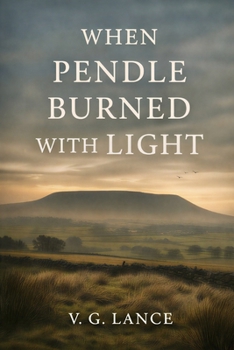
When Pendle Burned with Light

There are places that gather attention.
And there are places that survive it.
In a small English village beneath Pendle Hill, nothing unusual appears to happen. People walk familiar paths. Seasons turn without ceremony. Life continues in the quiet, unremarkable ways it always has.
After her grandmother's death, Elsie returns to the place she has always known. What begins as a simple act of staying becomes something more difficult to name-a slow reorientation toward a landscape that resists explanation, a community that has learned how to live without turning itself into a story.
When outside interest begins to gather-curiosity, interpretation, the desire to preserve and share-Elsie finds herself caught between attention and restraint. But the hill offers no answers. It does not reveal, instruct, or respond.
It simply remains.
When Pendle Burned with Light is a novel about what happens when a place refuses to become a performance.
Quiet, precise, and deeply atmospheric, it explores memory, inheritance, and the subtle ways communities endure-not by holding on tightly, but by learning when to let go.
For readers of literary fiction, British landscape writing, and restrained folk realism, this is a novel that lingers-less concerned with what is revealed than with what is left alone.
Customer Reviews
ThriftBooks ® and the ThriftBooks ® logo are registered trademarks of Thrift Books Global, LLC
