


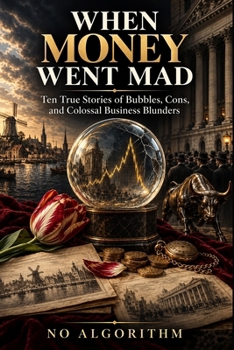
When Money Went Mad: Ten True Stories of Bubbles, Cons, and Colossal Business Blunders

When Money Went Mad tells ten true stories of financial mania, fraud, disastrous judgment, and spectacular corporate miscalculation.
The journey begins with Dutch tulip speculation in the seventeenth century and Gregor MacGregor's invented state of Poyais. It continues through Victor Lustig's Eiffel Tower fraud, the Pet Rock craze, Ronald Wayne's departure from Apple, the New Coke disaster, George Soros and Black Wednesday, Yahoo's long sequence of missed opportunities, Porsche's extraordinary Volkswagen short squeeze, and the collapse of QuadrigaCX.
These are not simple morality tales about foolish people losing money.
Each chapter looks beyond the famous version of the story and asks what the surviving evidence actually shows. Contemporary accounts, corporate records, court documents, financial filings, official investigations, and later historical research reveal stories that are often stranger, more complicated, and more interesting than the legends.
Some fortunes were lost. Some were made. Some catastrophes became unexpected triumphs. Some supposedly obvious mistakes were much less obvious when the decisions were actually made.
Across four centuries, the names and technologies change, but the forces remain remarkably familiar: greed, fear, imitation, confidence, ambition, reputation, leverage, bad incentives, and the dangerous belief that someone else will always be willing to pay more.
When Money Went Mad is narrative economic history for readers fascinated by markets, corporate decisions, financial scandals, famous frauds, and the recurring ways in which money can make otherwise rational people behave irrationally.
Customer Reviews
ThriftBooks ® and the ThriftBooks ® logo are registered trademarks of Thrift Books Global, LLC
