


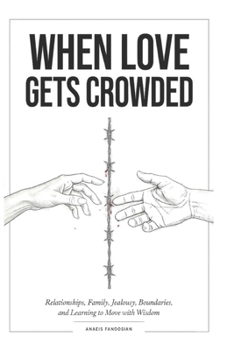
When Love Gets Crowded

When Love Gets Crowded is a practical guide about relationships, family involvement, jealousy, boundaries, emotional control, self-confidence, and wisdom. The book explores how love can become complicated when fear, insecurity, expectations, family opinions, or the desire for control enter relationships. A central message throughout the book is that emotions are important, but they should not automatically control our actions. Readers are encouraged to separate facts from assumptions, pause before reacting, communicate directly, and consider what other people have the right to choose. Healthy love allows people to remain individuals while still being connected. The book discusses how jealousy can come from fear and insecurity rather than proof that someone has done something wrong. It encourages readers to identify the trigger, examine the story they are telling themselves, consider the evidence, and choose a respectful response. It also explains the difference between healthy boundaries and attempts to control another person. Family relationships are another major focus. Parents are encouraged to protect children when there is genuine danger while also allowing them to develop judgment and independence. Family members should offer support without taking ownership of someone else's decisions or becoming involved in every disagreement. The book also addresses attachment and dependence, emphasizing that relationships should not require people to abandon their friendships, goals, responsibilities, privacy, or identity. Communication, listening, accountability, apologies, and repairing damaged trust are presented as important parts of healthy relationships. Throughout the book, fictional teaching stories, relationship research, Christian reflections, exercises, and practical questions help readers apply these ideas to real situations. The overall lesson is that healthy love requires freedom, truth, responsibility, humility, communication, and boundaries. Wisdom means choosing responses that protect dignity and safety rather than reacting impulsively.
Customer Reviews
ThriftBooks ® and the ThriftBooks ® logo are registered trademarks of Thrift Books Global, LLC
