


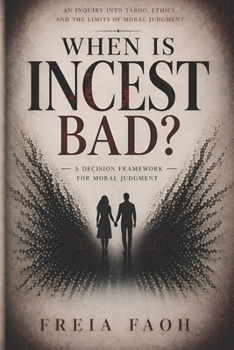
When is incest bad?

When Is Incest Bad? is a sharp, uncompromising examination of one of the most emotionally charged questions in moral life, asking not whether incest is bad, but under what conditions - and for what reasons - it is judged to be so. In some cases, the answer is clear - where there is coercion, harm, or compromised consent. But in others, where those factors are absent, the sense that incest is still wrong does not disappear. It remains, often just as strongly. Why?
This book offers a rigorous and unflinching exploration of that tension. Using a structured, decision-tree framework, it distinguishes objective objections grounded in autonomy and harm from a wide range of subjective judgments shaped by religion, biology, personal values, emotional reactions such as disgust, concerns about social and familial disruption, and broader interpretations of order and meaning. What emerges is not a single answer, but a layered understanding of how moral judgments are actually formed - how conviction can persist even when its foundations shift.
Rather than telling the reader what to think, When Is Incest Bad? compels the reader to examine how they think. It challenges instinctive certainty, exposes hidden assumptions, and reveals that what feels obvious is often constructed from multiple, sometimes conflicting, sources. In doing so, it transforms a taboo question into a deeper inquiry: not only when is incest bad, but how and why we come to judge anything as morally bad in the first place.
Related Subjects
PhilosophyCustomer Reviews
ThriftBooks ® and the ThriftBooks ® logo are registered trademarks of Thrift Books Global, LLC
