


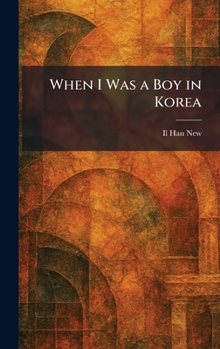

"When I Was a Boy in Korea" offers a captivating firsthand account of traditional life and customs in Korea through the eyes of a young boy. Written by Il Han New, this memoir provides an intimate look at the educational system, family structures, and cultural traditions of a nation during a period of significant historical transition. Readers will discover detailed descriptions of everyday life, including traditional games, seasonal festivals, and the social hierarchies that defined the era.
The narrative captures the delicate balance between ancient customs and the emerging modern influences of the early 20th century. By detailing his upbringing, New provides invaluable insights into the spirit of the Korean people and the cultural landscape of a country then less familiar to Western audiences. This work serves as both a poignant personal history and a significant ethnographic document, preserving the memories of a bygone era. It remains an essential resource for those interested in Asian history, sociology, and the universal journey of growing up in a rapidly changing world.
This work has been selected by scholars as being culturally important, and is part of the knowledge base of civilization as we know it. This work was reproduced from the original artifact, and remains as true to the original work as possible. Therefore, you may see the original copyright references, library stamps (as most of these works have been housed in our most important libraries around the world), and other notations in the work.
This work is in the public domain in the United States of America, and possibly other nations. Within the United States, you may freely copy and distribute this work, as no entity (individual or corporate) has a copyright on the body of the work.
As a reproduction of a historical artifact, this work may contain missing or blurred pages, poor pictures, errant marks, etc. Scholars believe, and we concur, that this work is important enough to be preserved, reproduced, and made generally available to the public. We appreciate your support of the preservation process, and thank you for being an important part of keeping this knowledge alive and relevant.
Customer Reviews
ThriftBooks ® and the ThriftBooks ® logo are registered trademarks of Thrift Books Global, LLC
