


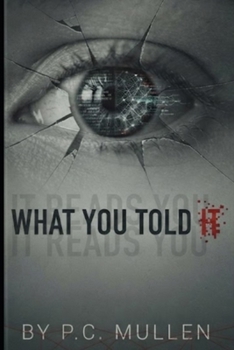
What You Told It: A Psychological Horror Thriller

A sprawling psychological horror about a literary agent who receives a manuscript that predicts her life in impossible detail, What You Told It explores the fine line between creation, obsession, and the devastating cost of being truly known.
Synopsis
Nora Voss is thirty-six, exceptionally good at her job, and exhausted by fifteen years of reading slush. Then comes an unsolicited query from a stranger named Elias Marrow. Complete at 118,000 words, his manuscript-a work of "speculative nonfiction"-contains granular, impossible details about Nora's private life: the hidden color of her submission folders, her secret habit of reading acknowledgments pages first, and the specific, unconscious gesture of her hand finding the edge of her watch when she is unnerved.
As Nora digs into Elias's background with the help of Theo Hale, a rare-books archivist, the mystery deepens. They uncover a forged wedding announcement, missing paper trails, and a shadowy institutional entity called the Increate Foundation. Most disturbing of all is Elias's living wife, Vera, who reveals that the tragic unraveling and affair Elias detailed in his book never actually occurred. Elias isn't lying; his mind and memories are actively being overwritten by an entity he calls "The Reader"-a synthetic cognition threshold capable of reading a human mind so completely that it begins to revise reality itself.
As the boundaries between the manuscript and Nora's real life begin to collapse, Nora must confront whether her choices are still her own, or if she has already been edited into a story that was written before she ever opened the page.
Key Selling Points
Chilling Conceptual Premise: Blends high-concept literary horror with analog metadata mysteries, perfect for fans of House of Leaves, Mark Z. Danielewski, and Paul Tremblay.
Meta-Textual Tension: Masterfully embeds manuscript chapters within Nora's investigation, creating an unsettling double-narrative where the act of reading itself becomes dangerous.
Deep Emotional Core: Beyond the eerie mechanics of memory forgery and "unauthorized authorship," the story delivers a poignant look at grief, marital isolation, and the terrifying difference between being understood and being loved.
Customer Reviews
ThriftBooks ® and the ThriftBooks ® logo are registered trademarks of Thrift Books Global, LLC
