


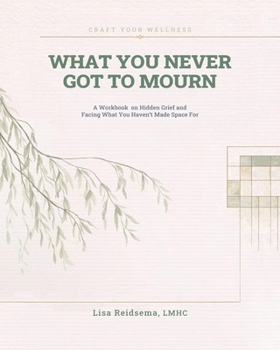
What You Never Got To Mourn

Not every loss comes with a funeral. Some losses never got a name. The friendship that ended without acknowledgment. The childhood that was not safe enough to be a childhood. The version of your life you were moving toward that quietly became impossible. The relationship that ended before it was ever fully real. The parent who was present but never actually there.
These are the losses that do not get witnessed. There is no gathering, no casserole, no one asking how you are holding up. And because there is no ritual and no acknowledgment, many people carry these losses for years, decades, without ever identifying them as grief at all. They show up instead as a low-level sadness that has no clear source, as difficulty trusting people, as a sense of something missing that cannot quite be named.
This workbook is for that kind of grief. It helps you identify what you have been carrying, trace what happened to the losses that could not be felt directly, and understand why unacknowledged grief does not simply fade with time. It maps what hidden grief costs in the body, in relationships, and in the ongoing sense of not quite being able to move forward. It then builds, step by step, the practice of acknowledging what was real, mourning what actually happened, and beginning to carry it all differently.
The grief does not have to resolve; it has to be acknowledged. For many people, the acknowledgment, finally naming what happened, and allowing it to be noticed are the things that have been missing all along.
What You Never Got to Mourn begins here.
Customer Reviews
ThriftBooks ® and the ThriftBooks ® logo are registered trademarks of Thrift Books Global, LLC
