


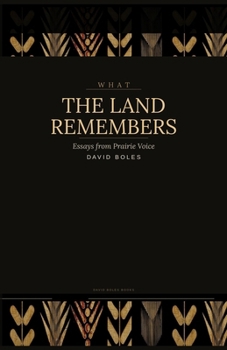
What the Land Remembers: Essays from Prairie Voice

The prairie does not hide things. It simply waits until you are ready to see them.
Between 1960 and 2020, America systematically dismantled the technologies that once produced capable citizens. Sunday observance, the handwritten letter, the potluck supper, the county fair, the one-room schoolhouse, the front-porch conversation; these were not leisure activities. They were the mechanisms by which communities reproduced themselves, transmitting not just skills but dispositions, not just knowledge but character. When those institutions disappeared, the civic capacity they generated disappeared with them.
The Great Plains is the best place to see this because the prairie is where those technologies were most exposed, most dependent on conscious maintenance, most obviously the product of human decision rather than historical inevitability. In dense cities, civic life can sustain itself through proximity. On the prairie, where the nearest neighbor might be a mile away and the nearest town twenty, every act of community is deliberate. When deliberate acts cease, the absence is immediate and total.
In twenty-two essays, a fictional interlude, and a sustained argument across six thematic sections, David Boles examines what the prairie built and what America discarded: moral vocabulary inherited from McGuffey's Readers, four-hour town meetings over seventeen dollars in road repair, veterinary practices that served communities unable to pay, deaf education on the open plains, refugee labor hidden beneath the harvest, aquifers dropping an inch a year toward collapse, abandoned internet forums, livestream homesteaders broadcasting to empty rooms, and community theatres dispensing catharsis like a cultural pharmacy.
Originally published in PrairieVoice.com, these essays have been edited for book publication. The arguments are unchanged. The voice is unchanged. The prairie is unchanged, though it gets quieter every year.
What the land remembers when America forgets.
Customer Reviews
ThriftBooks® and the ThriftBooks® logo are registered trademarks of Thrift Books Global, LLC
