


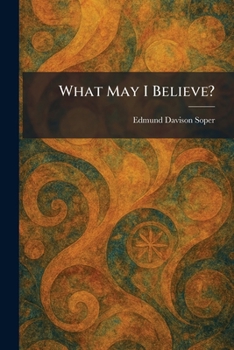
What May I Believe?

"What May I Believe?" is a thoughtful exploration of Christian faith and the foundational questions of religious life. Written by the esteemed theologian and educator Edmund Davison Soper, this work addresses the seeker's quest for certainty and meaning in an era of shifting intellectual and social landscapes. Soper examines the core tenets of Christianity, providing a clear and accessible guide for those grappling with doubt or seeking a deeper understanding of their spiritual convictions.
The book delves into essential topics such as the nature of God, the person of Jesus Christ, and the role of the Bible in the life of a believer. Soper avoids rigid dogmatism, instead opting for a persuasive and empathetic approach that invites readers to engage in their own process of spiritual discovery. By addressing both the intellectual and emotional dimensions of belief, "What May I Believe?" remains a significant resource for anyone interested in the intersection of reason and faith. Its focus on the essentials of doctrine makes it a valuable study of how one might construct a robust and living faith that remains relevant in the face of the complexities of the modern world.
This work has been selected by scholars as being culturally important, and is part of the knowledge base of civilization as we know it. This work was reproduced from the original artifact, and remains as true to the original work as possible. Therefore, you may see the original copyright references, library stamps (as most of these works have been housed in our most important libraries around the world), and other notations in the work.
This work is in the public domain in the United States of America, and possibly other nations. Within the United States, you may freely copy and distribute this work, as no entity (individual or corporate) has a copyright on the body of the work.
As a reproduction of a historical artifact, this work may contain missing or blurred pages, poor pictures, errant marks, etc. Scholars believe, and we concur, that this work is important enough to be preserved, reproduced, and made generally available to the public. We appreciate your support of the preservation process, and thank you for being an important part of keeping this knowledge alive and relevant.
Customer Reviews
ThriftBooks ® and the ThriftBooks ® logo are registered trademarks of Thrift Books Global, LLC
