


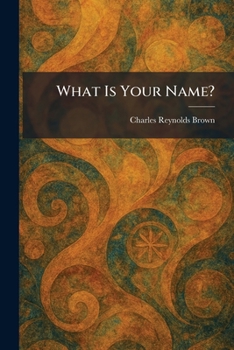
What Is Your Name?

"What Is Your Name?" is a compelling collection of addresses by Charles Reynolds Brown, designed to challenge and inspire the moral and spiritual development of young adults. These essays delve into the fundamental questions of identity, integrity, and purpose, exploring how an individual's name reflects their character and the values they uphold in the world.
The work navigates themes of Christian ethics, personal responsibility, and the cultivation of a meaningful life. Through relatable anecdotes and profound theological insights, Brown encourages readers to look beyond superficial achievements and focus on the internal virtues that define a person's legacy. Whether discussing the importance of honesty or the necessity of faith in the modern world, "What Is Your Name?" remains a timeless guide for anyone seeking to align their daily actions with their deepest convictions.
Ideal for those interested in religious thought and personal growth, this work highlights the enduring relevance of character-building. Brown's clear, persuasive prose serves as a call to action for individuals to take ownership of their moral identity and strive for a name that stands for honor and service.
This work has been selected by scholars as being culturally important, and is part of the knowledge base of civilization as we know it. This work was reproduced from the original artifact, and remains as true to the original work as possible. Therefore, you may see the original copyright references, library stamps (as most of these works have been housed in our most important libraries around the world), and other notations in the work.
This work is in the public domain in the United States of America, and possibly other nations. Within the United States, you may freely copy and distribute this work, as no entity (individual or corporate) has a copyright on the body of the work.
As a reproduction of a historical artifact, this work may contain missing or blurred pages, poor pictures, errant marks, etc. Scholars believe, and we concur, that this work is important enough to be preserved, reproduced, and made generally available to the public. We appreciate your support of the preservation process, and thank you for being an important part of keeping this knowledge alive and relevant.
Customer Reviews
ThriftBooks ® and the ThriftBooks ® logo are registered trademarks of Thrift Books Global, LLC
