


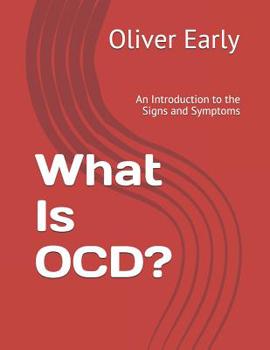
What Is OCD?: An Introduction to the Signs and Symptoms
No Customer Reviews

Who is this book for?People with OCDParents of OCD childrenSignificant others of people with OCDFriends of people with OCDAnyone who wants to learn more about OCDHundreds of hours of research have gone into these pages and I believe you will be happy with what you learn. This book is designed to give the reader an introduction to the different types of obsessive compulsive disorder, the signs and symptoms, and the most common treatments for this disorder.
Please note that this guide is not all-encompassing. For example, this book introduced the reader to a type of OCD commonly known as skin picking. However, as an introductory guide, it is beyond the scope of this book to go into all the different subtypes and names for skin picking disorder. For example, psychogenic excoriation, compulsive skin picking (CSP), pathologic skin picking (PSP), dermatillomania, neurotic excoriation, and acne excoriee. If this book covered every single type of OCD in depth, it would defeat the purpose of being an introductory guide.
Also, there are many forms of OCD which are talked about online, but which are not officially recognized-yet. For example, with the recent advent of sleep trackers, some people wearing them are becoming OCD about getting the recommended amount of sleep. This obsession has been given the label by some experts in the OCD community as orthosomnia or tracking the number of hours and minutes slept. Another example of a type of OCD not separately recognized as its own disorder is orthorexia nervosa or excessively worrying about healthy eating.
Another thing to keep in mind when reading this guide is that the medical community continues to refine the criteria of various conditions like OCD as new information becomes available. For example, there were changes in the categorization of OCD in the most recent Diagnostic and Statistical Manual of Mental Disorders (or DSM manual for short). Medical practitioners use the DSM in providing a diagnosis for mental health conditions. In the recent changes, OCD was removed from the anxiety disorders chapter. If you do your own research, you may find information categorizing OCD as an anxiety disorder. However, OCD now has its own chapter in the DSM. Also, as part of these recent changes, hoarding was also updated from being a symptom of OCD to being its own "OCD related" disorder. It is now known as hoarding disorder. Hoarding disorder is now included as its own section in the newly created DSM OCD chapter. The changes to the classification of OCD and hoarding serve to illustrate how the classifications of OCD and related conditions may change over time.
We have included a chapter in this book about hoarding. This is because of hoardings close association to OCD and its prevalence. (Some figures state that it affects twice as many people as OCD).
Thanks for stopping by. Buy this now for your introduction to OCD. Oliver G. Early
Author of "What is OCD" and the soon to be released "How to be Free from OCD."
Format:Paperback
Language:English
ISBN:1099999553
ISBN13:9781099999550
Release Date:June 2019
Publisher:Independently Published
Length:68 Pages
Weight:0.40 lbs.
Dimensions:0.1" x 8.5" x 11.0"
Customer Reviews
0 rating
Copyright © 2026 Thriftbooks.com Terms of Use
| Privacy Policy | Do Not
Sell/Share My Personal Information | Cookie Policy | Cookie Preferences | Accessibility Statement
ThriftBooks® and the ThriftBooks® logo are registered trademarks of Thrift Books Global, LLC
ThriftBooks® and the ThriftBooks® logo are registered trademarks of Thrift Books Global, LLC
