


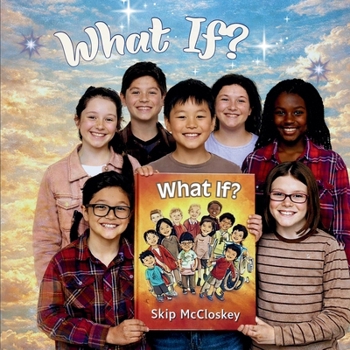
What If!

A Child's Perspective: Fitting In While Living With Barriers
From a young age, the child notices the differences that set them apart-differences in ability, identity, culture, language, or appearance. Their disability, whether physical (blindness, hearing impairment, mobility challenges, speech difficulties) or invisible (cognitive, emotional, or developmental), shapes how they move through the world.
They watch others run, speak, hear, or learn with ease and wonder why those things feel harder for them. They may face misunderstandings, judgment, or exclusion-sometimes because of their race, religion, gender identity, or cultural background, and other times because of their disability. They feel pressure to "fit in," to act like everyone else, or to hide the parts of themselves that others don't understand.
In school, with friends, or in public, they may compete silently-trying to keep up, trying not to stand out, trying to meet expectations built for people without their barriers. When they can't, they may question their worth.
But with time-and with support from understanding adults, peers, and communities-they begin to see themselves differently:
Their disability is not a weakness but one aspect of who they are.Their culture, language, and identity give them depth and perspective.Their challenges build resilience, empathy, and creativity.Their uniqueness brings something valuable to others that no one else can.Eventually, the child learns that belonging doesn't come from becoming what society expects-it comes from being themselves, sharing their strengths, and knowing they are worthy exactly as they are.
They realize:
"I don't have to fit into the world. The world can make space for me."
Customer Reviews
ThriftBooks ® and the ThriftBooks ® logo are registered trademarks of Thrift Books Global, LLC
