


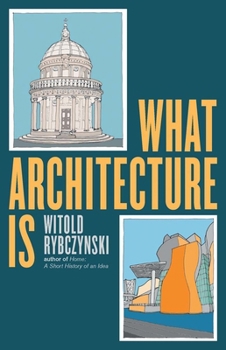
What Architecture Is

Witty, personal, and engaging, this cri de coeur from an esteemed critic takes on the age-old question of what elevates a mere building into an art form
What is it about architecture that distinguishes it from ordinary building? Frustrated with the many cookie-cutter buildings going up around his home in downtown Philadelphia, eminent architectural historian and critic Witold Rybczynski offers an immersive meditation on the question in this extended essay, an insightful and opinionated reflection on the essential qualities of architecture both historical and modern.
The book's structure pays homage to John Ruskin's treatise The Seven Lamps of Architecture; here, Rybczynski identifies his own guideposts: past, an awareness of ancient and modern architectural heritage; order, what emerges out of a careful plan; ornament, the addition of decorative elements; meaning, how buildings speak; beauty, or aesthetics; drawing, as a means to the end; and place, in the sense of both how place influences a structure and how architects create a sense of place. Rybczynski addresses the complicated question of what architecture is through compelling compositions on renowned buildings and designs--Hadrian's Arch, the Eiffel Tower, the Barcelona Pavilion--alongside examinations of lesser-known structures and charming anecdotes. The book is enlivened by fifty of the author's black-and-white drawings, adding another personal touch to this captivating book.
Related Subjects
ArchitectureCustomer Reviews
ThriftBooks® and the ThriftBooks® logo are registered trademarks of Thrift Books Global, LLC
