


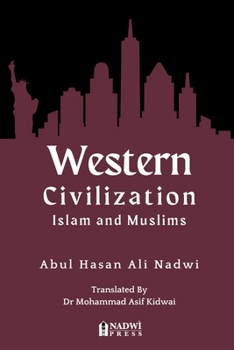
Western Civilization - Islam and Muslims

Western Civilization: Islam and Muslims examines a central modern question for Muslim societies: how to respond to the expanding influence of Western thought, education, and social forms without losing Islamic identity. Written as a historical assessment, the book surveys attitudes ranging from isolation and neutrality to selective adoption and full westernization, and evaluates their consequences across the Muslim world.
Across its chapters, the work traces major currents of modernism and westernization-highlighting the role of education, cultural planning, and intellectual leadership-while recording how ideas and institutions were received, resisted, or imitated in different regions.
It argues that the challenge is not hypothetical, but a real and urgent civilizational problem requiring clear principles, moral restraint, and mature judgment.
The author also frames a "permanent role" for the Muslim world grounded in faith, learning, and reform-affirming that Muslims must neither reject all that is useful nor surrender to uncritical imitation, but distinguish beneficial knowledge from harmful values.
Ideal for: scholars and students of Islamic thought, modern Muslim intellectual history, comparative civilization studies, and library collections seeking a disciplined, historically grounded critique of westernization from within the Islamic scholarly tradition.
Customer Reviews
ThriftBooks® and the ThriftBooks® logo are registered trademarks of Thrift Books Global, LLC
