


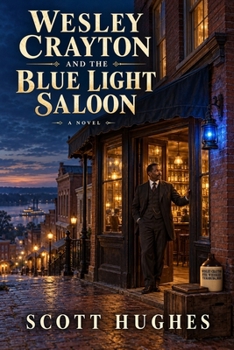
Wesley Crayton and The Blue Light Saloon

In Reconstruction-era Vicksburg, Wesley Crayton starts with a bundle of belongings and a day's work at a hotel. Years later, men who once called for him to carry their trunks come looking for him at his own counter. The Blue Light Saloon gives Wesley a livelihood, a place in the city's public life, and a door he can open to others. It also puts his name behind promises he cannot always keep.
When a conductor puts Wesley off a train as he tries to reach the car set aside for Black passengers, Wesley takes the railroad to court. Henrietta, his wife, saw what happened. She insists on telling it in her own words. She has work of her own in Vicksburg, too, and she knows how much of it goes unseen.
Inspired by the life of a real Vicksburg businessman and alderman, Wesley Crayton and the Blue Light Saloon follows Wesley and Henrietta through the years when Reconstruction's promises give way to Jim Crow. It is a novel about earning a place in a city that can still shut its doors on you, and deciding what to do with the doors you can open.
Customer Reviews
ThriftBooks ® and the ThriftBooks ® logo are registered trademarks of Thrift Books Global, LLC
