


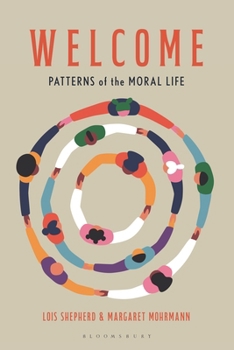
Welcome: Patterns of the Moral Life

This book offers a striking reorientation of ethics by arguing that welcome is the foundational practice from which moral life begins. Rather than treating ethics as a matter of rules, principles, or isolated virtues, the authors propose welcome as the primary moral orientation that makes responsibility, care, and justice possible in the first place.
Drawing on their interdisciplinary expertise in law, medicine, and religious ethics, the authors present ethics as something lived and relational. Being welcoming, they argue, is not a momentary act of kindness but an ongoing moral commitment that shapes how we see, receive, and respond to others in every context-from clinical encounters and legal systems to everyday social interactions. Welcome precedes obligation, creating the openness necessary to understand what responsibility requires.
The book is structured around a series of interconnected "patterns" rather than a linear theoretical argument. These patterns-stories, reflections, and case studies-illustrate how welcome operates in practice and what is lost when it is absent. Examples drawn from healthcare, law, and ordinary life invite readers to reflect on high-stakes moral situations as well as quotidian encounters, making the book especially effective for classroom discussion.
Customer Reviews
ThriftBooks® and the ThriftBooks® logo are registered trademarks of Thrift Books Global, LLC
