


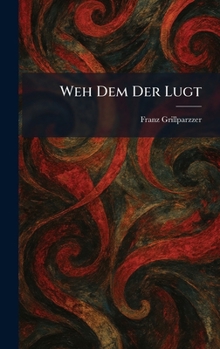
Weh Dem Der Lugt

"Weh Dem Der Lugt" is a celebrated five-act comedy by the renowned Austrian dramatist Franz Grillparzer. Set during the Merovingian period of the 6th century, the play follows Leon, a clever kitchen boy in the service of Bishop Gregory of Tours. When the Bishop's nephew is taken hostage by a rival noble, Leon is tasked with a daring rescue mission under a singular, challenging condition: he must succeed in his quest without ever uttering a single lie.
This masterpiece of dramatic literature explores the complexities of truth-telling and the nature of human morality. Leon navigates various perils and encounters through wit and linguistic dexterity, demonstrating that honesty can be far more multifaceted and strategic than it initially appears. Grillparzer masterfully blends humor with profound philosophical insight, creating a work that stands as a pillar of classical theater. "Weh Dem Der Lugt" remains a significant study of human character and the ethical dilemmas inherent in social interaction. Its blend of a historical setting with timeless themes continues to resonate with audiences and scholars of European drama, offering a sophisticated look at the power of language and the virtues of integrity.
This work has been selected by scholars as being culturally important, and is part of the knowledge base of civilization as we know it. This work was reproduced from the original artifact, and remains as true to the original work as possible. Therefore, you may see the original copyright references, library stamps (as most of these works have been housed in our most important libraries around the world), and other notations in the work.
This work is in the public domain in the United States of America, and possibly other nations. Within the United States, you may freely copy and distribute this work, as no entity (individual or corporate) has a copyright on the body of the work.
As a reproduction of a historical artifact, this work may contain missing or blurred pages, poor pictures, errant marks, etc. Scholars believe, and we concur, that this work is important enough to be preserved, reproduced, and made generally available to the public. We appreciate your support of the preservation process, and thank you for being an important part of keeping this knowledge alive and relevant.
Customer Reviews
ThriftBooks ® and the ThriftBooks ® logo are registered trademarks of Thrift Books Global, LLC
