


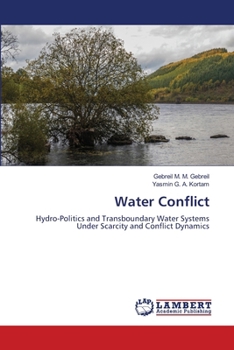
Water Conflict
No Customer Reviews

This book examines the transformation of transboundary water governance under climate change, hydrological variability, and geopolitical competition over shared rivers. It argues that traditional fixed-volume treaties are becoming obsolete, giving way to adaptive, multi-layered systems of negotiated interdependence. Using comparative analysis of the Nile, Indus, Mekong, and Tigris-Euphrates basins, it identifies three key drivers of hydro-political outcomes: institutional robustness, hydrological stress, and structural power asymmetry. The Indus Basin demonstrates relative stability through legal rigidity, while the Tigris-Euphrates shows persistent tension under fragmented governance. The Nile Basin reflects a transitional order shaped by upstream infrastructure expansion. The study further highlights how political economy, privatization, and multinational actors reshape water allocation and sovereignty, while technological innovation enhances monitoring but creates new data asymmetries. Overall, it provides a framework for understanding water security under scarcity, conflict, and environmental change.
Format:Paperback
Language:English
ISBN:6209966608
ISBN13:9786209966606
Release Date:May 2026
Publisher:LAP Lambert Academic Publishing
Length:108 Pages
Weight:0.34 lbs.
Dimensions:0.3" x 6.0" x 9.0"
Customer Reviews
0 rating
Copyright © 2026 Thriftbooks.com
Terms of Use | Privacy Policy | Do Not Sell/Share My Personal Information | Cookie Policy | Cookie Preferences | Accessibility Statement
ThriftBooks ® and the ThriftBooks ® logo are registered trademarks of Thrift Books Global, LLC
ThriftBooks ® and the ThriftBooks ® logo are registered trademarks of Thrift Books Global, LLC
