


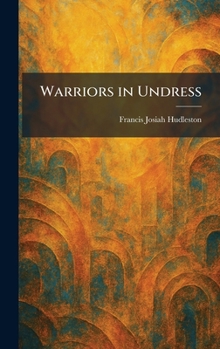
Warriors in Undress

"Warriors in Undress" is a witty and erudite collection of biographical sketches that explores the human side of history's notable military figures. Written by F.J. Hudleston, the former Librarian of the War Office, this work offers a refreshing departure from traditional tactical histories by focusing on the personalities, eccentricities, and private lives of soldiers and commanders. Through a series of engaging and well-researched essays, the author pulls back the curtain on the formal image of the "warrior" to reveal the man beneath the uniform.
The book covers a wide array of figures, providing insightful observations and humorous anecdotes about the rigors of camp life, the quirks of the officer class, and the realities of service during the 18th and 19th centuries. Hudleston's unique perspective and access to historical records allow him to present a social history that is both scholarly and accessible. With its blend of deep historical knowledge and lighthearted prose, "Warriors in Undress" is an essential read for those interested in the character and culture of the military past, offering a timeless look at the individuals who shaped history behind the scenes of the battlefield.
This work has been selected by scholars as being culturally important, and is part of the knowledge base of civilization as we know it. This work was reproduced from the original artifact, and remains as true to the original work as possible. Therefore, you may see the original copyright references, library stamps (as most of these works have been housed in our most important libraries around the world), and other notations in the work.
This work is in the public domain in the United States of America, and possibly other nations. Within the United States, you may freely copy and distribute this work, as no entity (individual or corporate) has a copyright on the body of the work.
As a reproduction of a historical artifact, this work may contain missing or blurred pages, poor pictures, errant marks, etc. Scholars believe, and we concur, that this work is important enough to be preserved, reproduced, and made generally available to the public. We appreciate your support of the preservation process, and thank you for being an important part of keeping this knowledge alive and relevant.
Customer Reviews
ThriftBooks ® and the ThriftBooks ® logo are registered trademarks of Thrift Books Global, LLC
