


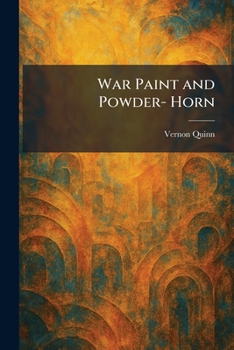
War Paint and Powder- Horn

"War Paint and Powder- Horn" is a vivid historical chronicle that captures the adventurous spirit and perilous realities of the Santa Fe Trail. The work delves into the epic struggle to open the American Southwest, detailing the lives of the rugged mountain men, intrepid pioneers, and the various Native American tribes who navigated this treacherous landscape. The narrative spans from the early explorations of the Spaniards to the eventual rise of the wagon trains, painting a comprehensive picture of the frontier during the nineteenth century.
Through tales of high-stakes commerce, frontier justice, and cultural encounters, the book explores the legends of figures like Kit Carson and the brave souls who forged a path through the wilderness. It highlights the constant tension between the advancing settlers and the indigenous peoples defending their ancestral lands, illustrating the war paint and powder-horn reality of the era. Vernon Quinn's engaging prose brings to life the dusty trails, the vast prairies, and the historical milestones that shaped the destiny of the United States. This work remains a significant contribution to Western Americana, providing a detailed look at the courage and conflict that defined the American westward expansion.
This work has been selected by scholars as being culturally important, and is part of the knowledge base of civilization as we know it. This work was reproduced from the original artifact, and remains as true to the original work as possible. Therefore, you may see the original copyright references, library stamps (as most of these works have been housed in our most important libraries around the world), and other notations in the work.
This work is in the public domain in the United States of America, and possibly other nations. Within the United States, you may freely copy and distribute this work, as no entity (individual or corporate) has a copyright on the body of the work.
As a reproduction of a historical artifact, this work may contain missing or blurred pages, poor pictures, errant marks, etc. Scholars believe, and we concur, that this work is important enough to be preserved, reproduced, and made generally available to the public. We appreciate your support of the preservation process, and thank you for being an important part of keeping this knowledge alive and relevant.
Customer Reviews
ThriftBooks ® and the ThriftBooks ® logo are registered trademarks of Thrift Books Global, LLC
