





Book Overview
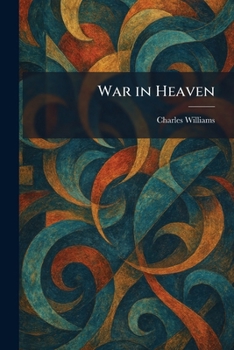
"War in Heaven" is a gripping supernatural thriller that masterfully blends the mundane with the mystical. The story begins with a shocking discovery: the Holy Grail, the legendary chalice of the Last Supper, is found residing in a quiet country parish in England. This revelation sets off a cosmic struggle between a group of devout believers and a sinister cabal of occultists who seek to harness the relic's ancient power for their own malevolent ends.
As the conflict escalates, the boundaries between the physical world and the spiritual realm begin to blur. Charles Williams, a celebrated member of the Inklings, weaves a complex narrative that explores profound theological themes through the lens of a fast-paced mystery. The novel delves into the nature of good and evil, the power of faith, and the reality of the supernatural forces that operate just beneath the surface of everyday life.
Combining elements of detective fiction with profound metaphysical inquiry, "War in Heaven" remains a landmark work of Christian fantasy. It offers a unique perspective on the Grail legend, reimagined within the context of early 20th-century society, and challenges readers to consider the eternal consequences of their actions in an interconnected universe.
This work has been selected by scholars as being culturally important, and is part of the knowledge base of civilization as we know it. This work was reproduced from the original artifact, and remains as true to the original work as possible. Therefore, you may see the original copyright references, library stamps (as most of these works have been housed in our most important libraries around the world), and other notations in the work.
This work is in the public domain in the United States of America, and possibly other nations. Within the United States, you may freely copy and distribute this work, as no entity (individual or corporate) has a copyright on the body of the work.
As a reproduction of a historical artifact, this work may contain missing or blurred pages, poor pictures, errant marks, etc. Scholars believe, and we concur, that this work is important enough to be preserved, reproduced, and made generally available to the public. We appreciate your support of the preservation process, and thank you for being an important part of keeping this knowledge alive and relevant.
Customer Reviews
It is a good read for Christian fiction.
Murder, a Quest, Humor, and Theology!
This Also is Thou
Profoundly insightful and poetic
Charles Williams - meaningful and influential
One of the Century's Overlooked Masterpieces
ThriftBooks ® and the ThriftBooks ® logo are registered trademarks of Thrift Books Global, LLC
