


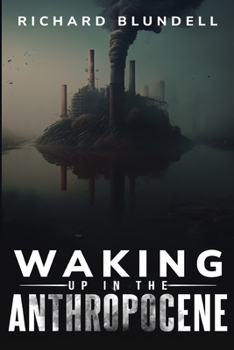
Waking up in the Anthropocene

In the past two decades a diverse and growing cadre of scholars and educators has been developing a new subject with the colloquial and rather catchy name of "Big History." Big Historians view history on a cosmic scale, claiming that the Big History perspective can yield important new insights about humans in the universe. Big History educators have also suggested that it offers a pedagogical framework capable of eliciting profoundly transformative ways of thinking about one's self, society, the global environment and beyond. Yet, despite the optimistic claims and growing enthusiasm for Big History, no one has yet rigorously explored the specific means by which Big History education might transform at its most fundamental level, that is, to change the way learners think. Also, in a time of serious concerns about the declining integrity of the planet's biosphere, an epoch known as the Anthropocene, no one has meaningfully articulated the potentially broader impacts of Big History as a form of environmental education
Customer Reviews
ThriftBooks® and the ThriftBooks® logo are registered trademarks of Thrift Books Global, LLC
