


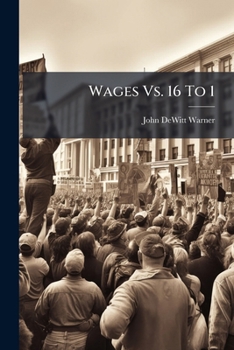
Wages Vs. 16 To 1

In "Wages Vs. 16 To 1," John DeWitt Warner delves into the intricate relationship between wages and the controversial bimetallic ratio of 16 to 1. This historical analysis examines the economic arguments surrounding the proposed monetary policy of the late 19th century United States, particularly its potential impact on the working class.
Warner's work provides a detailed examination of wage theories prevalent during the era, contrasting them with the predicted outcomes of adopting a 16 to 1 silver-to-gold ratio. This book offers valuable insights into the economic debates that shaped American history and continue to resonate in discussions about monetary policy and labor economics today. A must-read for anyone interested in understanding the complexities of 19th-century American economic thought.
This work has been selected by scholars as being culturally important, and is part of the knowledge base of civilization as we know it. This work was reproduced from the original artifact, and remains as true to the original work as possible. Therefore, you will see the original copyright references, library stamps (as most of these works have been housed in our most important libraries around the world), and other notations in the work.
This work is in the public domain in the United States of America, and possibly other nations. Within the United States, you may freely copy and distribute this work, as no entity (individual or corporate) has a copyright on the body of the work.
As a reproduction of a historical artifact, this work may contain missing or blurred pages, poor pictures, errant marks, etc. Scholars believe, and we concur, that this work is important enough to be preserved, reproduced, and made generally available to the public. We appreciate your support of the preservation process, and thank you for being an important part of keeping this knowledge alive and relevant.
Customer Reviews
ThriftBooks® and the ThriftBooks® logo are registered trademarks of Thrift Books Global, LLC
