


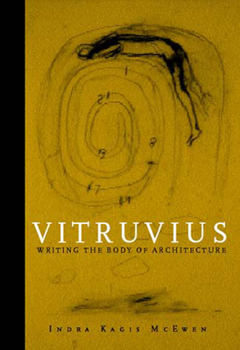
Vitruvius: Writing the Body of Architecture

Select Format
Select Condition 
Book Overview
Vitruvius's De architectura is the only major work on architecture to survive from classical antiquity, and until the eighteenth century it was the text to which all other architectural treatises referred. While European classicists have focused on the factual truth of the text itself, English-speaking architects and architectural theorists have viewed it as a timeless source of valuable metaphors. Departing from both perspectives, Indra Kagis McEwen examines the work's meaning and significance in its own time.
Vitruvius dedicated De architectura to his patron Augustus Caesar, the first Roman emperor, whose rise to power inspired its composition near the end of the first century B.C. McEwen argues that the imperial project of world dominion shaped Vitruvius's purpose in writing what he calls "the whole body of architecture." Specifically, Vitruvius's aim was to present his discipline as the means for making the emperor's body congruent with the imagined body of the world he would rule.
Each of the book's four chapters treats a different Vitruvian "body." Chapter 1, "The Angelic Body," deals with the book as a book, in terms of contemporary events and thought, particularly Stoicism and Stoic theories of language. Chapter 2, "The Herculean Body," addresses the book's and its author's relation to Augustus, whose double Vitruvius means the architect to be. Chapter 3, "The Body Beautiful," discusses the relation of proportion and geometry to architectural beauty and the role of beauty in forging the new world order. Finally, Chapter 4, "The Body of the King," explores the nature and unprecedented extent of Augustan building programs. Included is an examination of the famous statue of Augustus from Prima Porta, sculpted soon after the appearance of De architectura.
Related Subjects
Architecture Historic Preservation History Humanities Individual Architects & Firms ReferenceCustomer Reviews
ThriftBooks® and the ThriftBooks® logo are registered trademarks of Thrift Books Global, LLC
