


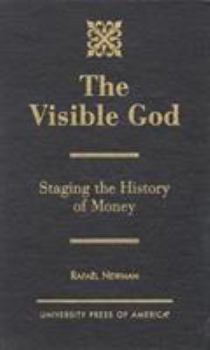
Visible God: Staging the History of Money
No Customer Reviews

The Visible God examines the semiotics of wealth, in its various representations, in select works from the ancient Greco-Roman comic tradition represented by Aristophanes and Plautus and from the tradition's inheritors in two later periods through Lucian and Shakespeare. Using diverse literary-critical and sociological methods of reading, the book suggests that in this criticism comedy performs a self-censoring function, a sort of "recontainment" whereby the emancipatory energies of a given item on the agenda for social change may be altered, within a text's rhetorical economy, even as the utopian possibilities of that change, the fantasies of a more equitable distribution of wealth or a more just transmission of patrimony that it gives rise to, can be exploited, to often robust comic effect. This book contributes to the fields of classical studies and comparative literature, melding the studies of rhetoric, Marxist sociological methodology and psychoanalytic approaches to investigate the early configuration of an economic allegory still at work in western culture, broadening a traditional area of inquiry: the roots of modern western literature in the productions of Greece and Rome.
Format:Hardcover
Language:English
ISBN:0761812520
ISBN13:9780761812524
Release Date:February 1999
Publisher:University Press of America
Length:208 Pages
Customer Reviews
0 rating
Copyright © 2026 Thriftbooks.com Terms of Use
| Privacy Policy | Do Not
Sell/Share My Personal Information | Cookie Policy | Cookie Preferences | Accessibility Statement
ThriftBooks® and the ThriftBooks® logo are registered trademarks of Thrift Books Global, LLC
ThriftBooks® and the ThriftBooks® logo are registered trademarks of Thrift Books Global, LLC
