


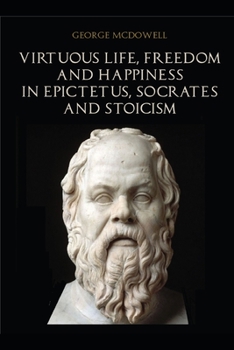
Virtuous Life, Freedom and Happiness in Epictetus, Socrates and Stoicism

The meaning and usage of happiness in modern times differ from the ancient one. People in modern societies hold an understanding of happiness that represents a materialistic view.
The ancient Greek philosophers regard happiness with different attitudes and ideas.
In the Stoic view, external impressions are the source of pleasures. When one makes judgments and forms desire based on external impressions, the problem arises. By nature, human beings are rational; they may have similarities with animals but they also can think, to judge, to evaluate, and to question. For Epictetus, as for the Stoics, the road to happiness consists in not letting ourselves be dependent on passions, and in acting following our nature. This means following the guidance of reason rather than passions and pleasures. Happiness relies on this inward orientation toward reason, and so one should never whine about what one could have, would have, or should have.
Thus, what nature gave us from birth it is already enough- being rational, having freedom, and having innate knowledge of goodness and evil. Knowing what is good and what is evil will lead one's soul to the virtuous actions.
Related Subjects
PhilosophyCustomer Reviews
ThriftBooks® and the ThriftBooks® logo are registered trademarks of Thrift Books Global, LLC
