


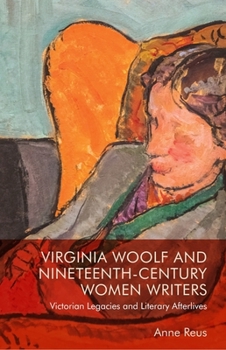
Virginia Woolf and Nineteenth-Century Women Writers: Victorian Legacies and Literary Afterlives

This book examines Virginia Woolf's influence on the literary afterlives of nineteenth-century women of letters including Jane Austen, Mary Russell Mitford, Elizabeth Barrett Browning, Charlotte Bront , George Eliot, Margaret Oliphant and Mary Augusta Ward through her journalism. Woolf's responses to her literary predecessors provide new insights into her self-positioning within the literary canon and the interplay of biographical innovation and Victorian legacies in her non-fiction. This study demonstrates that Victorian narratives and tropes of female professionalism continue to shape Woolf's representations of nineteenth-century women writers even at the heyday of her Modernist fame. It contextualizes the overt feminism of A Room of One's Own within Woolf's more ambiguous literary biography to argue for its status as a transitional, post-Victorian body of work.
Customer Reviews
ThriftBooks ® and the ThriftBooks ® logo are registered trademarks of Thrift Books Global, LLC
