


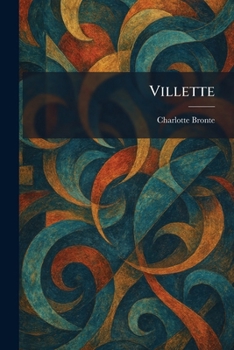
Villette

"Villette" is a profound and intensely psychological novel by Charlotte Bront that explores the inner life of Lucy Snowe, a young woman who, after suffering an unspecified family tragedy, travels to the fictional French-speaking city of Villette. Taking up a position as a teacher at Madame Beck's boarding school for girls, Lucy navigates a world of isolation and emotional repression while seeking a sense of belonging and independence.
This masterpiece is celebrated for its searing exploration of loneliness and the female psyche. As Lucy observes the lives around her, she finds herself entangled in complex relationships with the charismatic Dr. John and the fiery, academic Monsieur Paul Emanuel. Bront utilizes a first-person narrative to masterfully depict Lucy's internal struggles, blending elements of the Gothic with sharp social commentary on the constraints placed upon women in the nineteenth century.
A more mature and introspective work than "Jane Eyre", "Villette" remains a cornerstone of Victorian literature. It offers a hauntingly beautiful examination of unrequited love, the resilience of the human spirit, and the search for identity in a cold and often indifferent world. Readers will be captivated by Bront 's evocative prose and her unflinching look at the complexities of the human heart.
This work has been selected by scholars as being culturally important, and is part of the knowledge base of civilization as we know it. This work was reproduced from the original artifact, and remains as true to the original work as possible. Therefore, you may see the original copyright references, library stamps (as most of these works have been housed in our most important libraries around the world), and other notations in the work.
This work is in the public domain in the United States of America, and possibly other nations. Within the United States, you may freely copy and distribute this work, as no entity (individual or corporate) has a copyright on the body of the work.
As a reproduction of a historical artifact, this work may contain missing or blurred pages, poor pictures, errant marks, etc. Scholars believe, and we concur, that this work is important enough to be preserved, reproduced, and made generally available to the public. We appreciate your support of the preservation process, and thank you for being an important part of keeping this knowledge alive and relevant.
Customer Reviews
ThriftBooks ® and the ThriftBooks ® logo are registered trademarks of Thrift Books Global, LLC
