


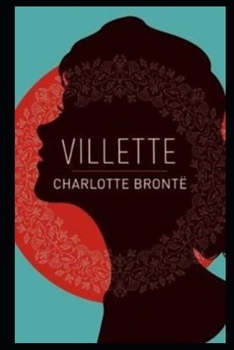
Villette " Illustrated Book"
No Customer Reviews

Most people will associate the name Bront with either Emily's Wuthering Heights, or Charlotte's Jane Eyre. More fervent readers may also think of Anne's The Tenant of Wildfell Hall, but only a few will consider Villette. This isn't necessarily because it isn't any good, however; George Eliot herself noted: "I am only just returned to a sense of the real world about me, for I have been reading Villette, a still more wonderful book than Jane Eyre." Before I plunge into the full-on glorification of this book though, I want to give you a little bit of context.Charlotte Bront published Villette in 1853, under her pseudonym, Currer Bell. This was six years after her release of the infamous Jane Eyre, however, and by this time it was widely known that the author who went by the name, "Currer Bell", was, in fact, a woman. Nevertheless, Charlotte associated herself with her pseudonym and tended to use it as a way of distancing herself - and her reputation as a female writer - from her work, and so published Villette under her male persona, despite the circulating knowledge that the man named Bell did not exist.Villette is composed as a semi-autobiographical work; just as the governess figure is considered in Jane Eyre, it is again explored by this second novel. Ten years before Villette was published, Charlotte had spent some time in Brussels, where she had worked as a foreign governess, an identity also assumed by Lucy Snowe in Villette. It is also suspected that Monsieur Paul, the head of English in the school that Lucy takes up work, was based on either Constantin Heger, or James Taylor, two men Charlotte had romantic associations with during her time in Brussels. That's quite enough context for now, though, so let's get on with talking about the text
Format:Paperback
Language:English
ISBN:B0863VPJ52
ISBN13:9798629505693
Release Date:January 1
Publisher:Independently Published
Length:590 Pages
Weight:1.88 lbs.
Dimensions:1.3" x 6.0" x 9.0"
Customer Reviews
0 rating
Copyright © 2026 Thriftbooks.com Terms of Use
| Privacy Policy | Do Not
Sell/Share My Personal Information | Cookie Policy | Cookie Preferences | Accessibility Statement
ThriftBooks® and the ThriftBooks® logo are registered trademarks of Thrift Books Global, LLC
ThriftBooks® and the ThriftBooks® logo are registered trademarks of Thrift Books Global, LLC
