Skip to content
Scan a barcode
Scan
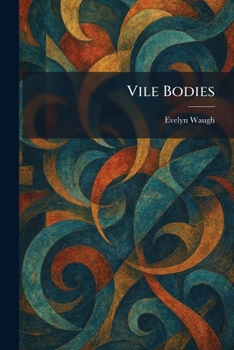
Paperback Vile Bodies Book

ISBN: 1025443446

ISBN13: 9781025443447

Vile Bodies

Select Format

Select Condition ThriftBooks Help Icon

Recommended

Format: Paperback

Condition: New

$23.95
Ships within 2-3 days
Save to List

Book Overview

"Vile Bodies" is a sharp, acerbic satire that captures the frenetic and often shallow lives of the "Bright Young Things" in post-World War I London. Evelyn Waugh's acclaimed novel presents a whirlwind of decadent parties, social climbing, and romantic entanglements through the eyes of protagonist Adam Fenwick-Symes. As Adam attempts to navigate a world of shifting fortunes and bizarre social expectations to marry the elusive Nina Blount, he encounters a cast of eccentric characters who embody the disillusionment and excess of the interwar period.

Written with Waugh's signature wit and cynical edge, the work explores themes of generational conflict, the influence of the tabloid press, and the underlying sense of chaos following the Great War. The narrative moves at a breathless pace, mirroring the frantic search for pleasure and novelty that defined the era's youth culture. "Vile Bodies" stands as a seminal work of twentieth-century literature, offering both a hilarious and devastating critique of a society teetering on the brink of modernity while struggling to find meaning in the aftermath of global upheaval. Its blend of dark humor and poignant social observation remains a definitive portrait of the Jazz Age.

This work has been selected by scholars as being culturally important, and is part of the knowledge base of civilization as we know it. This work was reproduced from the original artifact, and remains as true to the original work as possible. Therefore, you may see the original copyright references, library stamps (as most of these works have been housed in our most important libraries around the world), and other notations in the work.

This work is in the public domain in the United States of America, and possibly other nations. Within the United States, you may freely copy and distribute this work, as no entity (individual or corporate) has a copyright on the body of the work.

As a reproduction of a historical artifact, this work may contain missing or blurred pages, poor pictures, errant marks, etc. Scholars believe, and we concur, that this work is important enough to be preserved, reproduced, and made generally available to the public. We appreciate your support of the preservation process, and thank you for being an important part of keeping this knowledge alive and relevant.

Customer Reviews

3 ratings

Idiots and savants

The great thing about Evelyn Waugh is that the humor of his novels transcends their era. You don't have to know anything about English society of the 1920s to be entertained by "Vile Bodies" because Waugh's style relies on fundamentally silly characters, wry dialogue, piercing intelligence, and manic energy more than on contemporary culture, events, and figures. What makes his humor unique is that he can be irreverent without being tasteless, which seems an amazing concept since modern comedy has made the terms "irreverent" and "tasteless" practically synonymous. Few novels can elicit from me at least one paroxysm of audible laughter, but "Vile Bodies" succeeds in this feat, as does most of Waugh's work. "Vile Bodies," one his earlier novels, is prototypical of his career, featuring a protagonist who is beleaguered by misfortunes but manages to rise to certain challenges. Adam Fenwyck-Symes is a young author who would like to marry his girlfriend Nina Blount but doesn't have enough money to support her, and he has to write twelve books before he can get a decent advance from his publisher. For the time being, he rents a room at a boarding house run by a woman named Lottie Crump and inhabited by a disparate group of idiots including the deposed king of Ruritania.Adam petitions Nina's father, a retired colonel who is either senile or eccentric or both, a wealthy man who's too cheap to buy a car or pay for bus fare but enthusiastic enough about the cinema to blow all his money on the production of a film about Methodism founder John Wesley, for some financial aid, but the old man's strings can't be pulled so easily. A ray of hope is offered in the form of the suicide of a local rag gossip columnist named Simon Balcairn who assumes the nom de plume of Mr. Chatterbox. Adam fills in for the deceased hack, documenting the antics of the partying crowd, nonchalantly embellishing and inventing items to make the proceedings more interesting to his readers and himself. Waugh is brilliant in the way he constructs an episodic novel within the context of an overarching plot, each of his characters usually having one distinct idiosyncrasy that contributes something significant to the story. One episode consists of a drunken Major who bets Adam's money on a sure horse but never makes it clear whether Adam will ever get his money back. Another memorable scene is an automobile race attended by Adam and a few of his friends, including Agatha Runcible, a young lady who nearly immolates herself by carelessness with her discarded cigarettes. And perhaps the most salient extraneous character is Mrs. Melrose Ape, an American evangelist who travels with a chorus of winged "angels," each named after a Virtue. (Chastity's persistent misconduct with strange men is troublesome to the troupe.) Virtue or not, Discontent could never be as Divine as one of Waugh's novels.

Vile Bodies as 1930s remake of Through the looking glass

What seems to be most missed by readers of Vile Bodies is the supposedly cold ironic author's sympathy for the Bright Young Things he's writing about. So they're empty, loveless, superficial, but they are also the animating force of the novel (1930 was a turgid time of Depression), inventive, amusing, some are even likeable. The love scene between Adam and Nina is very moving behind the brutally ironic mode of its narration - we sense two very scared naive human beings who live by appearances struggling as the reality of the situation hits them. The young people act as they do because their society has no moral centre they can cling to. Parents are mentally unstable and reckless, judges allow young girls to die stupidly in their company, prime ministers are lecherous old codgers, aristocratic grands dames are white slave traders, and religion is either a stepping stone for power (Rothschild) or a vulgarised money-grubbing circus (Miss Ape). By contrast, the Things' aimless frivolity is something of an understandable rebellion in the face of this example from their elders. So ineffectual is the Establishment that the two characters who do wish to settle down in the conservative state of marriage, however sincere or otherwise, are constantly hindered. Ironically, the form of the book is fragmentary, mirroring the society it portrays, but it is the exploits of the Things that bring it together, give it a unifying force. The book is epigraphed by two quotes from Through the looking glass: like Alice, ordered hierarchical society looks at itself, and sees a mad whirling spinning top going madly out of control. Like Thomas Pynchon's Maxwell Demon, the more energy it expends the quicker it reaches inertia. The war at the end isn't literal (we are never given any wider political dimensions). Adam is flung off the merry-go-round into a bleak, dismal hell of his own making, a life without any meaningful ties to shore up against the ruins. A very moving, terrifying, sad, comic masterpiece from the century's funniest writer.

A Masterpiece about the Absurdity of Man

In Mr. Waugh's second novel, the absurdity of humankind is explored. The reader is allowed to follow a brief period in the lives of the "Bright Young People." They are young Londoners of the early 1930's who are well educated and from good families. Through the trials of the protagonist, Adam Fenwick-Symes, the reader is able to see the silliness of human existence. The "Bright Young People" spends their days and nights avoiding all real human experiences, especially love. Mr. Waugh chronicles a time in England when the motto "eat, drink and be merry" was embraced as a spiritual philosophy. At times, passages in this book are very amusing, but it never fails to recognize how life can be wasted when people are just "vile bodies."

Vile Bodies Mentions in Our Blog

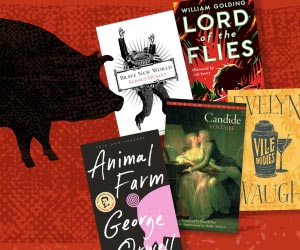
Vile Bodies in The Enduring Appeal of Animal Farm
The Enduring Appeal of Animal Farm
Published by Ashly Moore Sheldon • May 13, 2026
All the buzz around Andy Serkis's controversial new adaptation of George Orwell's Animal Farm, reminds us to revisit this beloved satirical allegory and appreciate its lasting power. It also brings to mind many other treasured volumes offering a darkly comic lens to their time and place in history.   
Copyright © 2026 Thriftbooks.com Terms of Use | Privacy Policy | Do Not Sell/Share My Personal Information | Cookie Policy | Cookie Preferences | Accessibility Statement
ThriftBooks ® and the ThriftBooks ® logo are registered trademarks of Thrift Books Global, LLC

GoDaddy Verified and Secured